


Dense tufted wool carpet is increasingly specified in architectural and interior design projects where flooring must satisfy multiple performance layers at the same time, including durability, acoustic control, tactile comfort, and long-term visual consistency. Rather than being treated as a simple finishing material, it is now considered part of the overall spatial performance system in commercial and premium residential environments.
What makes this category of carpet particularly important is not only the use of wool, but also the engineering behind tufting density, backing stability, and fiber interaction under continuous load. These combined factors determine whether a flooring solution can sustain both functional stress and design expectations over years of use.
How Dense Tufted Construction Supports Structural Stability
The performance of dense tufted wool carpet is largely defined by how tightly the fibers are anchored into the backing system. In high-density constructions, the spacing between tufted points is reduced, which creates a more unified surface structure rather than a loosely connected fiber field.
This structural difference directly affects how the carpet behaves under pressure. Instead of isolated fiber movement, the load is distributed across a broader fiber network, which improves stability and reduces localized deformation.
● Reduced tuft spacing improves overall surface cohesion
● Load distribution becomes more even across large flooring areas
● Fiber movement is controlled, reducing uneven surface wear
● Structural integrity is maintained under repeated compression cycles
● Long-term surface geometry remains more consistent
The Role of Wool in Functional Interior Performance
Wool is not only selected for aesthetic reasons but also for its intrinsic physical properties that contribute to indoor environmental quality. Its fiber structure contains natural crimping and surface scales, which influence how it reacts to pressure, moisture, and airborne particles.
In dense tufted systems, these properties are amplified because the fibers are held in a more compact formation, allowing their natural behavior to contribute to system-level performance rather than isolated fiber response.
● Natural fiber crimp enhances elastic recovery under load
● Surface scale structure helps reduce particle penetration
● Moisture buffering supports more stable indoor humidity levels
● Thermal retention contributes to energy efficiency in interiors
● Natural resilience improves long-term usability in occupied spaces
Acoustic Control in Large Interior Environments
One of the most important reasons dense tufted wool carpet is specified in commercial architecture is its impact on acoustic performance. In open-plan environments, sound reflection from hard surfaces can significantly affect comfort and productivity.
Dense tufted wool carpet helps reduce this issue by absorbing airborne sound and dampening impact noise generated by movement, furniture shifting, and equipment use.
Instead of sound bouncing across surfaces, the fiber structure traps and dissipates acoustic energy at multiple layers within the carpet system.
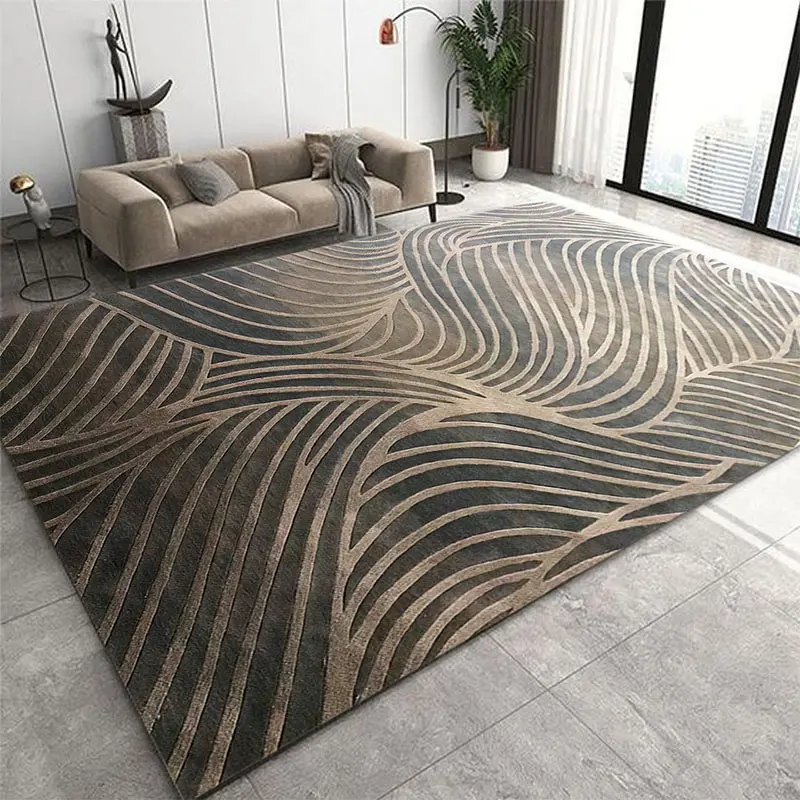
Application Patterns Across Different Project Types
Dense tufted wool carpet is not limited to a single industry or building type. Its performance characteristics allow it to be integrated into a wide range of architectural contexts where both durability and experience quality are important.
● Hospitality environments where guest perception and comfort are critical design factors
● Corporate headquarters focusing on acoustic management and professional atmosphere
● Educational and cultural buildings requiring balanced durability and visual neutrality
● Luxury residential interiors prioritizing material quality and long-term living comfort
● Transportation-adjacent spaces such as lounges and waiting areas with continuous foot traffic
● Multi-use event environments requiring adaptable yet durable flooring systems
Maintenance Logic in Dense Fiber Systems
From a lifecycle perspective, dense tufted wool carpet behaves differently from low-density or synthetic alternatives. The tighter fiber structure reduces the depth at which dust and particles can settle, which changes how maintenance strategies are designed.
Instead of relying heavily on deep cleaning cycles, most maintenance is concentrated on surface-level care, supported by periodic professional intervention when required.
The wool fiber itself also contributes to maintenance efficiency due to its natural resistance to rapid soiling penetration.
● Surface-level cleaning is more effective due to compact fiber structure
● Particle retention is reduced in upper fiber layers
● Wool surface chemistry slows down contamination adhesion
● Maintenance cycles can be optimized based on traffic intensity
● Long-term appearance retention is supported by structural density
Interior Design Integration and Visual Behavior
In architectural interiors, flooring is not only a functional surface but also a visual foundation that influences how other design elements are perceived. Dense tufted wool carpet provides a controlled visual texture that remains stable across lighting variations and usage conditions.
This consistency is particularly valuable in large-scale projects where multiple zones must feel visually connected while still supporting different functional purposes.
The uniform surface behavior of dense tufted wool carpet helps prevent visual fragmentation, which is a common issue in lower-density flooring systems.
Environmental Considerations and Material Lifecycle
Sustainability considerations have become a defining factor in modern material selection. Dense tufted wool carpet aligns with these priorities through both its raw material source and its lifecycle behavior.
Wool is naturally renewable and continuously regenerated through animal growth cycles, making it fundamentally different from petroleum-based synthetic fibers. At the end of its service life, wool-based carpet materials can degrade naturally without contributing to long-term environmental accumulation.
In addition, the extended usability of dense constructions reduces replacement frequency, which indirectly lowers overall material consumption in long-term building operation.
Installation Precision and System Performance
The final performance of dense tufted wool carpet is strongly influenced by installation quality. Even when the material itself is engineered for durability, improper installation can compromise surface uniformity and long-term stability.
Key installation considerations include subfloor flatness, tension control, seam alignment, and adhesive compatibility. In large architectural projects, even small inconsistencies can become visually amplified across extensive floor areas.
Professional installation ensures that the dense fiber structure performs as intended within the broader building system.
Conclusion
Dense tufted wool carpet functions as a high-performance interior flooring system rather than a simple decorative surface. Its value lies in the combination of engineered density and natural wool behavior, which together create a stable, durable, and acoustically effective flooring solution.
For architects and designers working on complex interior environments, it offers a material that supports both technical requirements and spatial experience. Its ability to maintain structural integrity, visual consistency, and environmental compatibility makes it suitable for a wide range of modern building applications where long-term performance is essential.
FAQ
1. What defines dense tufted wool carpet at a technical level?
It is defined by a higher concentration of tufted wool fibers per unit area, creating a more stable and cohesive surface structure.
2. How does it perform in acoustic-sensitive environments?
It absorbs impact and airborne sound effectively, making it suitable for offices, hotels, and large public interiors.
3. Does higher density affect material flexibility?
It increases structural stability while still maintaining enough fiber flexibility for comfort and surface adaptability.
4. What makes it suitable for architectural projects?
Its combination of visual consistency, durability, and acoustic control allows it to integrate well into complex interior design systems.
Post time: Jun-01-2026


