


A Luxury Wool Rug is defined by more than the presence of wool alone. Wool quality, yarn preparation, density, construction method, finishing, pattern detail, and long-term surface performance all influence whether a rug develops a refined and substantial character. Two rugs can both contain wool yet differ greatly in texture, resilience, visual depth, and craftsmanship.
In interior design, a Luxury Wool Rug can provide warmth, softness, and a strong material presence while also serving as a decorative surface. Wool responds to light and pile direction in distinctive ways, so even a limited color palette can show subtle tonal variation. Understanding these characteristics explains why construction details matter as much as appearance.
Wool as the Foundation of a Luxury Wool Rug
Wool is a natural fiber with resilience and surface character. Its natural crimp helps the fiber recover after compression, while its structure affects the way wool accepts dye and reflects light.
A Luxury Wool Rug may use different wool grades depending on the intended texture and performance. Fiber length, fineness, strength, and cleanliness can influence spinning and the final surface. Finer wool may feel smoother, while stronger wool can provide useful structure and durability. The best fiber therefore depends on construction and intended use, not softness alone.
Yarn Quality and Preparation
Before wool becomes part of a Luxury Wool Rug, it is cleaned, prepared, spun, and often dyed. These stages influence surface consistency and pattern definition.
Yarn thickness and twist affect pattern definition and texture. Hand-spun yarn may contain natural variation that supports a handcrafted character, while more uniform yarn suits precise designs. Dyeing also matters: consistent dye lots create controlled color, while intentionally varied dyeing can introduce subtle tonal movement.
Density and Surface Structure
Density is an important construction characteristic in a Luxury Wool Rug. A dense surface can support detailed patterns and create a substantial feeling underfoot, but density should be considered together with pile height and yarn thickness.
A very high pile is not automatically more luxurious. If the pile is too long for the construction, it may hide pattern detail or move excessively under pressure. A shorter, dense pile can feel equally refined while keeping the design clearer.
Cut pile creates a soft surface with exposed yarn ends. Loop pile provides more structure. Some Luxury Wool Rug designs combine different pile heights or pile types to create raised, recessed, or carved areas.
These dimensional techniques allow texture to become part of the design. Light creates different shadows across the surface, which can make a neutral rug appear complex without requiring many colors.
Hand-Knotted and Hand-Tufted Construction
Construction method strongly influences the character of a Luxury Wool Rug. Hand-knotted rugs are created by tying individual knots around foundation threads. This method can support detailed patterns and durable structures when materials and workmanship are controlled.
Hand-tufted rugs are produced by inserting yarn through a backing with a tufting tool. The surface is then secured and finished. Tufting allows extensive control over shape, pile height, carving, and bold graphic design.
Neither method should be judged by its name alone. Construction should suit the design: fine traditional motifs may benefit from precise knotting, while large contemporary graphics and sculptural textures may work especially well with tufting.
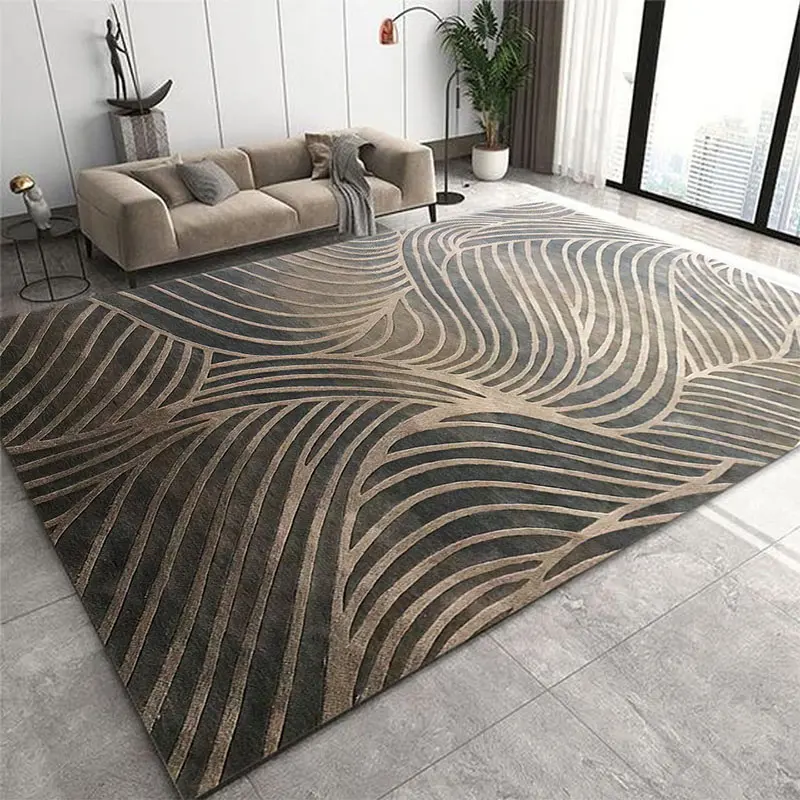
Color Depth and Pile Direction
Wool accepts dye well and can produce rich, complex colors. A Luxury Wool Rug may use deep saturated shades, soft neutrals, or restrained combinations depending on the interior concept.
The same yarn color can appear lighter or darker from different directions because pile orientation changes how light reflects from the surface. This normal characteristic can create useful visual depth in both neutral and stronger colors.
Pattern Detail and Scale
Pattern should relate to the dimensions of the rug and the furniture placed on it. A Luxury Wool Rug used in a large living room may need a broader pattern scale than one used in a bedroom or study.
Fine motifs can demonstrate detailed workmanship, but they should remain visible after furniture is added. A central medallion may disappear beneath a coffee table, while a border pattern remains visible.
Contemporary Luxury Wool Rug designs may use abstract forms, tonal geometry, or sculpted texture. A restrained design can still feel refined when materials, density, proportion, and finishing are carefully controlled.
Edge Finishing and Back Construction
The finishing of a Luxury Wool Rug should be evaluated as carefully as the visible pile. Edges need to remain stable and consistent because irregular binding or weak finishing can affect both appearance and durability.
Edges may be bound, serged, or finished by hand, but corners should lie flat and the perimeter should remain stable. The back can also indicate construction: hand-knotted rugs usually reveal the pattern through the foundation, while hand-tufted rugs generally use a secondary backing. A rug pad can reduce movement and friction.
Placement and Everyday Care
A Luxury Wool Rug often becomes one of the largest textile surfaces in a room, so furniture relationships matter. In a living room, it should connect the main seating arrangement rather than appear isolated beneath a small table.
In a bedroom, a large Luxury Wool Rug can extend around the bed to create a soft landing surface. In a dining room, dimensions should allow chairs to remain supported when moved away from the table.
Heavy furniture can compress wool pile, so supports may help distribute pressure. The rug should also be protected from unnecessary moisture and prolonged direct sunlight when these may affect fibers or dyes.
Regular gentle vacuuming removes dry particles without disturbing the pile. New wool rugs may release some loose surface fibers during early use. Spills should be treated promptly with wool-appropriate methods, and professional cleaning should match the construction, dyes, and backing.
Conclusion
A Luxury Wool Rug is distinguished by the relationship between fiber quality, yarn preparation, density, construction, color, finishing, and design. Wool provides a resilient and visually rich foundation, but craftsmanship determines how effectively these qualities appear in the surface.
A Luxury Wool Rug can be simple in color and pattern yet still feel refined when proportion, texture, density, and finishing are carefully controlled.
By evaluating the construction rather than one feature alone, it becomes easier to understand how a Luxury Wool Rug can contribute lasting comfort and material depth to an interior.
Frequently Asked Questions
1. Is every wool rug a Luxury Wool Rug?
No. Wool content alone does not determine overall quality. Fiber grade, yarn preparation, density, construction method, finishing, design execution, and durability all contribute to the character of a Luxury Wool Rug.
2. Does a Luxury Wool Rug need a high pile?
No. A dense low or medium pile can feel highly refined and may provide clearer pattern definition. Pile height should suit the construction and intended use.
3. Why can a Luxury Wool Rug look lighter from one direction?
Pile direction changes how light reflects from the wool surface, creating natural shading or apparent color variation when viewed from different directions.
4. How should a Luxury Wool Rug be cleaned?
Regular gentle vacuuming is important, while spills should be treated promptly with methods suitable for wool. Professional cleaning should match the rug’s construction, dyes, and backing.
Post time: Aug-14-2026


