


Many people choose furniture, wall colors, curtains, and lighting before they think seriously about home area rugs. That order is understandable, but it often leaves the room feeling unfinished. A sofa may look correct, the floor may be clean, and the color palette may be attractive, yet the space can still feel empty because nothing connects the furniture into one visual zone. This is where home area rugs become more than decoration. They help the room feel planned, comfortable, and complete.
A home area rug works like a soft frame for daily life. It can gather the sofa and coffee table into a clear living area, create a warm landing beside the bed, make a reading corner feel intentional, or soften the transition between hard flooring and furniture. In open-plan homes, rugs are especially useful because they divide different functions without building walls. A dining space, lounge area, or children’s play corner can each have its own identity through rug size, color, and texture.
The best rug is not always the most colorful or the most expensive one. It is the rug that understands the room. A busy living room may need a durable low-pile area rug with a balanced pattern. A quiet bedroom may need a softer surface and calmer tone. A hallway or transitional space may need something easy to clean and stable underfoot. When selecting home area rugs for different interiors, the first question should not be “Which design looks beautiful?” It should be “What job does this rug need to do in this room?”
Start With the Room, Not the Rug
Before choosing home area rugs, it is better to look at the room as a whole:
- Where do people usually walk?
- Which furniture pieces should visually belong together?
- Is the floor wood, tile, marble, laminate, or concrete?
- Does the room need warmth, color, softness, or stronger definition?
- Will children or pets use the area every day?
- Should the rug become a quiet background or the main design feature?
Living Room Rugs Should Connect the Furniture
In many homes, the living room is the first place where an area rug makes a visible difference. Without a rug, sofas and chairs may look like separate pieces placed on the floor. With the right rug, the seating arrangement feels connected.
For a living room, size is usually more important than many people expect. A very small rug under only the coffee table can make the sofa area look disconnected. A better approach is to choose a rug large enough for at least the front legs of the sofa and chairs to rest on it. In larger rooms, all major seating pieces can sit fully on the rug to create a stronger lounge zone.
Design also matters. A neutral modern rug can support a clean interior without distracting from furniture. A printed or vintage-style rug can add depth to simple rooms. A wool or tufted area rug can bring more comfort and premium texture. For high-use living rooms, it is also important to consider pile height and ease of cleaning because beauty alone is not enough for daily family use.
Bedroom Rugs Should Focus on Comfort and Calm
Bedroom rugs have a different purpose. They do not need to impress visitors first; they need to improve comfort. A rug beside the bed creates a soft touch in the morning and makes the room feel warmer. A larger rug under the bed can help anchor the sleeping area and make the room look more complete.
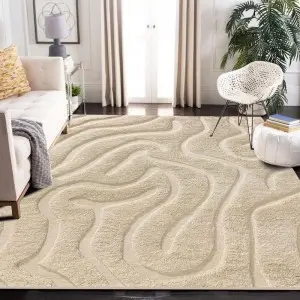
Soft colors usually work well in bedrooms, including beige, cream, ivory, grey, light brown, muted blue, and gentle patterns. A thick plush rug may feel comfortable, but it should still be practical for cleaning. In children’s bedrooms, parents may prefer printed or playful designs, while in adult bedrooms, quiet patterns and soft textures are often easier to live with for many years.
Open-Plan Homes Need Rug-Based Zoning
Open-plan living is popular, but it can also create one problem: different functions blend into each other too much. A living area, dining area, and work corner may share the same floor, making the space feel undefined. Home area rugs can solve this in a simple and flexible way.
A rug under the sofa group tells the eye where the living area begins and ends. A flatter rug under a dining table can make the dining zone feel separate. A small rug near a reading chair can create a quiet corner. Unlike permanent partitions, rugs can be changed when the layout changes.
Material and Construction Affect Daily Use
Home area rugs are available in many materials and structures, including wool, polyester, printed surfaces, tufted construction, loop pile, cut pile, and blended options. Each type has a different feel and use value.
Wool rugs are often chosen for natural texture, resilience, and comfortable touch. Printed rugs are useful when rich patterns are needed, vintage effects, or customized visual designs. Tufted rugs offer flexibility in pile height, shape, and texture. Low-pile rugs can be easier to maintain in busy areas, while softer medium-pile rugs may suit bedrooms and lounges better.
Home Area Rugs From Fanyo Carpets
Fanyo Carpets offers different carpet and rug options for home interiors, including modern rugs, printed carpets, vintage-style carpets, wool carpets, tufted rugs, children’s rugs, and customized area rugs. This is useful when different rooms need different products rather than one fixed style for the whole home.
Conclusion
Home area rugs make interiors feel more complete because they connect furniture, define zones, improve comfort, protect flooring, and add visual warmth. The right rug should be selected according to room function, size, material, backing, color, and daily use needs. When these details are considered together, an area rug becomes a useful part of the home, not just a decorative accessory.
FAQ
Q1: What size should home area rugs be?
A home area rug should be large enough to connect the main furniture in the room. In a living room, the front legs of sofas and chairs should usually sit on the rug.
Q2: Are home area rugs suitable for open-plan spaces?
Yes. Area rugs are very useful for open-plan homes because they help separate living, dining, work, and play areas without using walls.
Q3: Which rug material is good for bedrooms?
Soft wool, tufted, or medium-pile rugs are often suitable for bedrooms because they provide comfort and warmth underfoot.
Q4: Can home area rugs be customized?
Yes. Home area rugs can be customized in size, color, pattern, shape, pile height, and backing according to different room needs.
Post time: Jul-20-2026


