


Hallway Carpet plays both a practical and visual role in one of the most frequently used areas of a home or commercial interior. A hallway connects rooms, entrances, stairs, and shared spaces, so people repeatedly walk through the same route. This concentrated movement means the flooring must cope with more continuous wear than flooring in a quiet bedroom or occasional sitting area.
A well-planned Hallway Carpet can soften footstep noise, protect the main walking path, and introduce color or texture without changing the surrounding architecture. The best result depends on choosing suitable dimensions, construction, fiber, pattern, color, and maintenance methods for the actual level of traffic.
Understanding the Function of Hallway Carpet
A hallway is often treated only as a passage, but its appearance influences how nearby rooms feel connected. Hallway Carpet can create continuity between separate spaces and make a narrow route look intentionally designed.
Hallway Carpet can also reduce the hard visual effect of timber, tile, stone, or concrete. Because hallways contain less furniture than living rooms, the floor becomes one of the largest visible surfaces. For this reason, even a restrained pattern or color can strongly affect the atmosphere.
A suitable Hallway Carpet can reduce footstep noise, protect frequently used floor areas, add warmth, repeat colors from nearby rooms, and guide the eye through a long corridor. These functions should be balanced with durability because pressure is concentrated along the same central path.
Choosing the Correct Width and Length
The dimensions of Hallway Carpet should follow the corridor rather than a standard assumption. Narrow hallways need enough clear walking space, while wider hallways allow more flexibility in the amount of exposed flooring.
For fitted Hallway Carpet, measurements should include door recesses, corners, thresholds, and changes in corridor width. Older buildings may have walls that are not perfectly straight, so measuring several points is safer than relying on one width.
If Hallway Carpet is installed with visible floor borders, the exposed space on both sides should look balanced. The border does not need to be large, but it should remain visually consistent from one end to the other.
Length also matters. Long corridors may require joins depending on carpet roll dimensions and installation direction. Patterned Hallway Carpet should be planned so repeated motifs align naturally instead of ending awkwardly near doorways.
Durability for Repeated Foot Traffic
Hallways concentrate movement into a small area, so Hallway Carpet should be selected for resilience rather than softness alone. Very deep or delicate pile can flatten quickly if it is not designed for frequent traffic.
Dense low-pile and medium-pile constructions are often practical because they offer comfort while maintaining a controlled surface. Tight loop structures may also perform well when specifically designed for high-traffic use.
Wool is valued for resilience, natural appearance, and recovery after compression. Wool blends can combine natural texture with other performance characteristics. Synthetic fibers may provide consistent color and practical cleaning, although performance depends on fiber quality, density, backing, and construction.
Product specifications should match the expected traffic level, which may differ greatly between a quiet home corridor and a shared hotel, office, or apartment hallway.
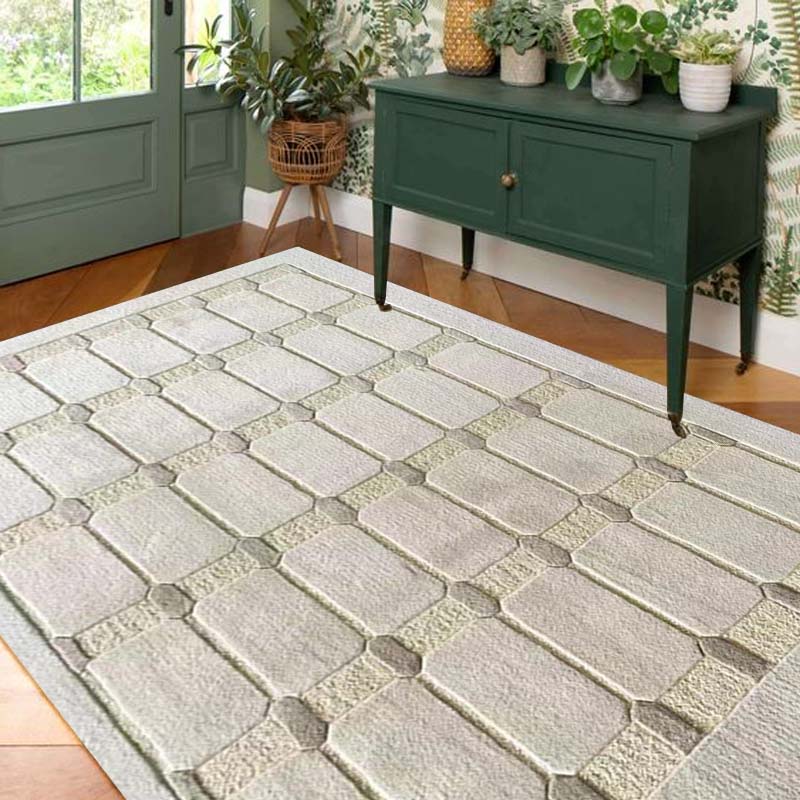
Using Pattern to Shape the Hallway
Pattern can change how a corridor is perceived. Long stripes emphasize direction and can make the hallway feel more extended. Cross-directional or repeated motifs can interrupt excessive length and create a more balanced appearance.
Small patterns are useful because they remain recognizable even when doors and corners interrupt the floor. Large motifs can make a stronger statement but require careful positioning so important parts are not cut off.
Geometric Hallway Carpet suits contemporary interiors, while traditional, distressed, or tonal designs can create a softer effect. Pattern also has a practical advantage because controlled color variation may make minor marks or everyday changes less noticeable than a completely plain pale surface.
Managing Doorways and Floor Transitions
A technical challenge with Hallway Carpet is the number of surfaces it may meet. Corridors often connect to bedrooms, bathrooms, kitchens, stairs, and entrances that use different flooring materials.
The combined height of Hallway Carpet and underlay should allow doors to open freely. Suitable threshold details can create clean transitions to hard flooring. Stair connections and door openings should also be measured carefully so the finish remains neat and stable.
Cleaning and Maintaining Hallway Carpet
Regular maintenance is important because dust, grit, and soil can become embedded in Hallway Carpet and contribute to visible wear. Vacuuming frequency should reflect the amount of traffic, with entrance-side areas receiving additional attention.
Entrance mats can reduce outdoor particles, while spills should be treated promptly with methods suitable for the fiber and backing. Aggressive rubbing may spread a mark or disturb the pile. Loose edges, damaged seams, or lifting near thresholds should be corrected early.
Creating Visual Continuity Between Rooms
Hallway Carpet can serve as a connecting element between different interior schemes. If nearby rooms contain several materials and colors, a neutral Hallway Carpet can provide a calm transition. If the surrounding interiors are simple, a patterned Hallway Carpet can introduce character into the circulation area.
Conclusion
Hallway Carpet must combine appearance with durability because it is installed in a space defined by repeated movement. Width, length, pile construction, fiber, pattern, color, thresholds, and cleaning requirements should be considered together.
A carefully selected Hallway Carpet can soften sound, protect the main walking route, connect adjacent rooms, and give a narrow corridor a stronger visual identity. Treating the hallway as an important interior space rather than an empty passage can improve both daily comfort and overall design.
Frequently Asked Questions
1. What type of Hallway Carpet is suitable for high traffic?
Dense low-pile, medium-pile, or tightly constructed loop products are often suitable when rated for frequent use. Fiber quality, density, backing, and the intended environment should all be considered.
2. What color Hallway Carpet works well in a narrow corridor?
Light and mid-tone colors can maintain an open appearance, while patterns or blended shades may make everyday marks less noticeable. The final choice should be checked under the hallway’s actual lighting.
3. Should Hallway Carpet match nearby rooms?
Exact matching is unnecessary. Hallway Carpet can repeat selected colors or textures from surrounding rooms while keeping its own pattern or tone.
4. How often should Hallway Carpet be vacuumed?
The schedule depends on traffic. Frequently used hallways may need vacuuming several times a week, especially near entrances where dust and grit accumulate more quickly.
Post time: Aug-10-2026


